

2025 AgeTech Market Map (8th Edition)
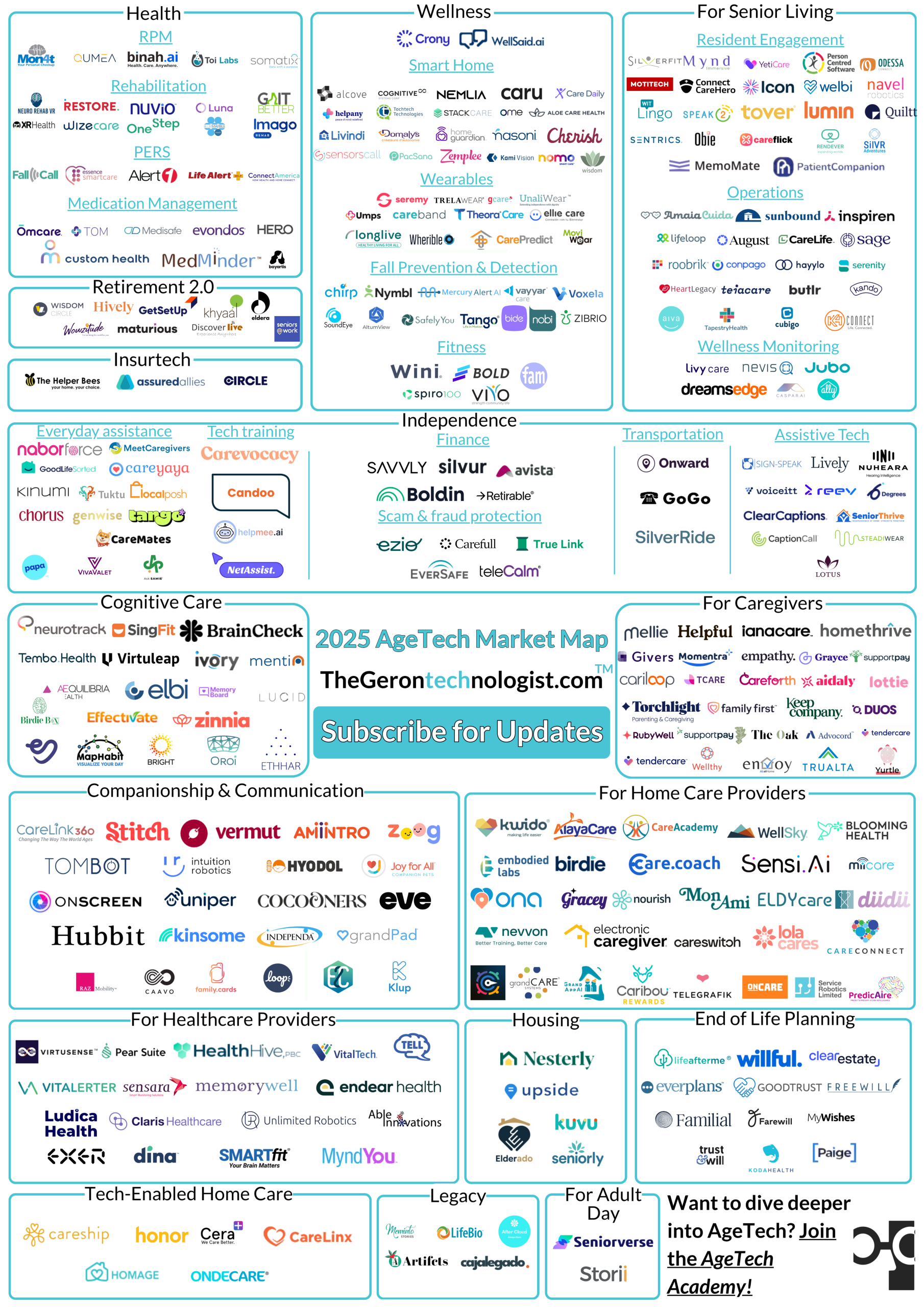
Welcome to the 8th edition of the AgeTech Market Map!
To review our inclusion criteria and submit your startup for review, click here.
The global AgeTech landscape is shifting rapidly. Demographic change, skyrocketing caregiving demand, and rising tech adoption among older adults are converging with another powerful macro trend: the rise of the longevity economy. Together, these forces are reshaping how we age – and fueling one of the strongest long-term growth opportunities of the next decade.
The 2025 AgeTech Market Map reflects this transformation. Despite the typical challenges startups deal with in the post zero percent interest rate era, the ecosystem continues to expand: this year features 300+ AgeTech companies, including 60 new AgeTech startups, spanning caregiving technology, independence solutions, robotics, longevity fintech, and more.
AgeTech is foundational to the future of our economies, our workforces, and our families.
The Demographic Shift
Population aging is accelerating globally: Adults 60+ are the fastest-growing age group on Earth. By 2050, the world will have more than 2 billion older adults.
- The number of adults 80+ is growing twice as fast as the 65+ population.
- By 2050, 1 in 6 people globally – and 1 in 4 across Europe and North America – will be over 65.
- In many OECD countries, there will soon be more people over the age of 65 than people under the age of 18.
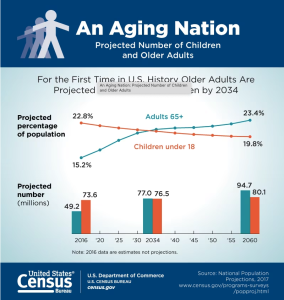
These shifts drive rising demand for caregiving, housing, transportation, financial planning, and safety – and therefore rising demand for AgeTech innovation.
The Longevity Economy: A Trillion-Dollar Opportunity
The longevity economy represents all economic activity driven by the needs, spending power, and contributions of people over 50. According to the Global Longevity Economy Report (AARP), older adults represent a multi-trillion-dollar economic force across every major region and the fastest-growing consumer segment globally. It’s also a group with higher per-capita spending than any other age group in categories such as housing, healthcare, transportation, travel, financial services, and home goods.
As populations age, the longevity economy becomes one of the most powerful economic engines of the 21st century:
- In many countries, people over 50 already generate a third of GDP.
- Older adults drive half of consumer spending.
- And by 2050, this group will expand dramatically – adding hundreds of millions of new consumers.
This growth directly increases demand for AgeTech solutions, especially in areas such as:
- Aging-in-place technology
- Home robotics and automation
- Caregiving platforms
- Financial resilience and fraud prevention tools
- Transportation and mobility innovation
- Brain health and cognitive wellness
- Social connection and enrichment
- Healthspan and lifestyle longevity solutions
As governments face pressure on pension systems, long-term care, and workforce shortages, AgeTech companies are increasingly filling the gap.
Supporting longer lives is the economic opportunity of the century.
Family caregivers are now one of the largest and most overlooked markets in AgeTech. According to the 2025 Caregiving in the U.S. report, 63 million Americans – nearly one in four adults – provided care to an older adult, child, or family member this year, up from 53 million just five years ago.
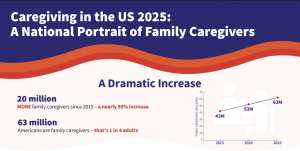
Caregivers increasingly span every age, income level, and cultural background, and many of them are the primary decision-makers for purchasing technology that supports safety, independence, and care coordination.
At the same time, the world faces a severe shortage of paid caregivers. Global analyses show that the elder-care workforce would need to grow by 13.5 million workers across OECD countries just to maintain today’s ratios. “In the United States, a national shortage of 151,000 care workers will exist by 2030, and a 355,000-caregiver shortfall by 2040”
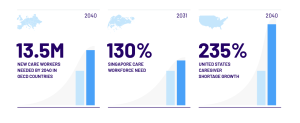
With fewer paid professionals available, more responsibility shifts to unpaid family members—most of whom are juggling employment, caregiving, and their own health needs.
For AgeTech founders, this dual dynamic – a rapidly expanding caregiver population and a shrinking professional workforce – creates one of the strongest market opportunities of the decade. Family caregivers are not only a massive audience; they are also high-intent users seeking tools that reduce burden, improve coordination, and make care more sustainable.
Tech Adoption Among Older Adults
Older adults are embracing technology at record levels:
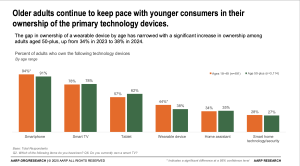
- Over 90% of adults 50+ own smartphones.
- Smart-home devices, wearables, and accessibility tools are now mainstream.
- Older adults are adopting AI-based health and financial tools at rapid speed.
- Caregivers increasingly rely on apps, sensors, and remote monitoring platforms to manage complex care.
This is creating fertile ground for AgeTech startups, making tech for older adults and tech for caregivers one of the most investable categories of 2025.
The State of AgeTech in 2025
- The AgeTech ecosystem continues to grow, with 300+ companies on this year’s map.
- 60 new AgeTech startups qualified for inclusion.
- Companies on the map raised nearly $700M in funding, an increase over 2024.
- Aging-in-place technology, caregiver support, robotics, cognitive health, and longevity fintech lead the growth curve.
- Shutdowns this year reflect sector maturation, not contraction – stronger expectations for validation, product-market fit, and economic sustainability.
The macro need continues to grow faster than the supply of solutions. The next decade will be defined by innovators who can close this gap.
Inclusion criteria
The AgeTech Market Map highlights startups and scale-ups that are building the next generation of technology for aging.
I want to take this opportunity to talk a bit about our inclusion criteria and also, our exclusion criteria.
What are we looking for?
- We include companies that are built and operated as technology companies at their core.
- VC funded companies.
- Companies that are bootstrapped or funded by grants are also eligible if the product is already commercially available (meaning, I can go on your website and buy it) + generating revenue.
What’s out of scope?
- Medical devices and companies providing diagnostics and therapeutics for specific medical conditions – we love you but you’re out of scope for us. A general rule of thumb – if it’s under FDA regulation – it’s typically out of scope.
- Service providers, non profits – you’re doing god’s work but you are also out of scope.
- Side hustles and student projects that aren’t yet incorporated into a company – we’re rooting for you and can’t wait to see you on the map someday!
- Pure hardware with no digital component (e.g., mobility aids, stair-lift chairs, grab bars, non-connected medical equipment)
- Pure websites with no actual product beyond the website itself (informational sites, directories, blogs)
- Public companies and legacy companies – we focus on startups and scale-ups building the next generation of AgeTech. Publicly traded companies and long-standing corporations that have been around for decades are out of scope. We prioritize companies founded within the last 10–12 years.
- Companies that are the only one in their category – If you’re the first mover in a new niche, we may add the category in future editions – feel free to submit so we can keep you on our radar.
- We focus on products and platforms that can expand nationally – and ideally internationally, over time. Local-only services, or solutions tied to a single geography without a clear path to scale, are generally out of scope
Here’s the link to submit your company.
Even if you don’t meet the inclusion criteria of VC funding and/ or a commercially available product yet – feel free to submit because we still want to have you on our radar and even if you don’t qualify this year, we’ll keep track and might add you next year.
Stay humble, stay curious,
Keren & TheGerontechnologist team